
The One-Sentence Rule of Thumb
If you're replacing a garage door in Kendall, assume you need both HOA sign-off and a wind-rated door — the exceptions are rare enough that you should plan for both before you ever pick a color swatch.
That's the short version your spouse can read in ten seconds. Here's the longer version for when someone says "but our neighbor didn't do that."
Why HOA Approval Usually Comes First
Most communities with an HOA require an architectural review before you change anything visible from the street — and a garage door is about as visible as it gets. The board isn't trying to make your life harder; they're trying to keep the block looking consistent, which protects resale values for everyone, including you.
- What they typically care about: door style, color, window inserts, and sometimes the material (steel vs. faux wood look).
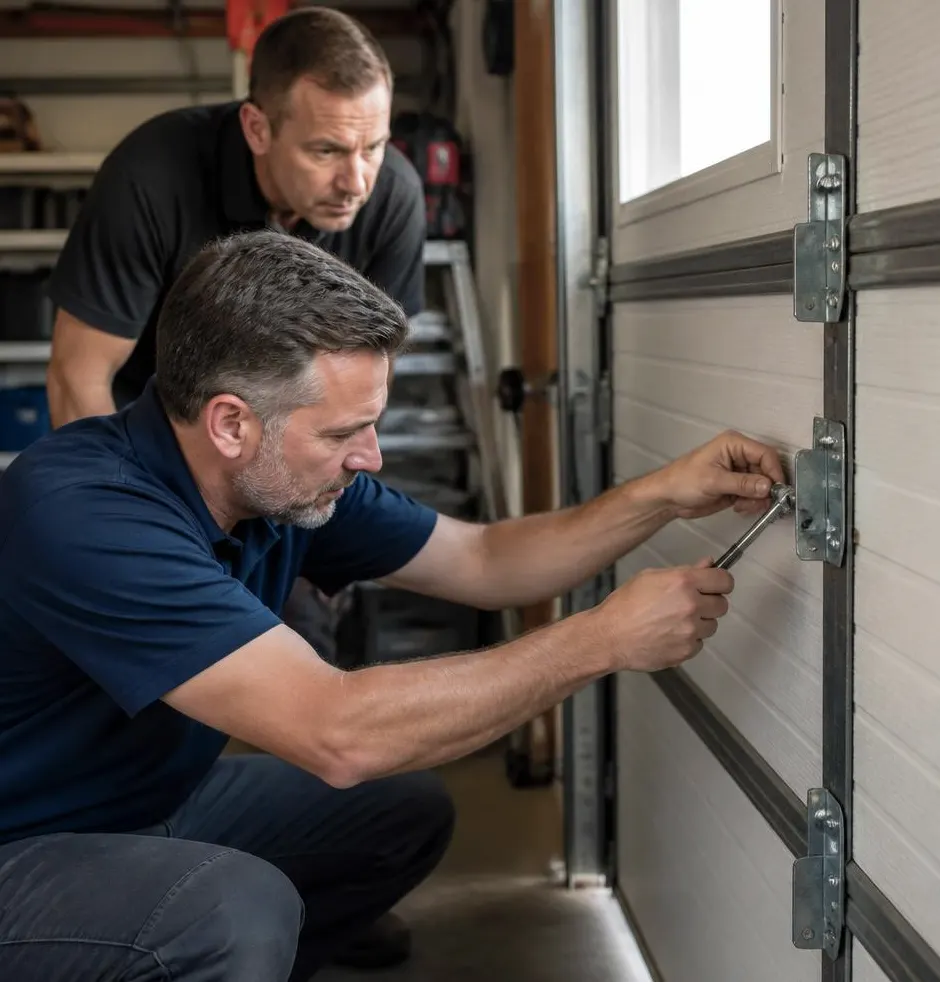
- What they usually don't control: the mechanical parts — springs, cables, the opener, the track hardware. That stuff is invisible from the curb, so it rarely needs approval.
- The exception that trips people up: if your replacement changes the door's appearance at all — a different panel style, a new window pattern, a color swap — treat it as a visible change and submit it, even if the old door was falling apart and "obviously" needed replacing.
The argument-settling takeaway: an emergency repair after a storm is different from a planned upgrade. If a panel blew out overnight and you're putting back something that looks the same, you're in safer territory. If you're using the opportunity to upgrade to a nicer-looking door, that's when you stop and check with the board first.
Permits: Not Just a Formality
A permit pull is typically tied to the physical installation — the fact that someone is removing an existing structure and installing a new one, including the track, springs under tension, and sometimes the opener wiring. This is less about paperwork for its own sake and more about making sure whoever installs it is doing the structural parts correctly, since a garage door is one of the largest moving openings in a home and a poor installation can fail under storm pressure.
A few practical notes, without pretending to know your exact county's checklist:
- Permitting requirements can depend on whether you're doing a like-for-like swap versus changing the opening size or structure.
- A reputable installer should know what documentation is needed and should be comfortable walking you through it — if a company brushes off the question entirely, that's worth noticing.
- Skipping a required permit doesn't just risk a fine; it can also complicate things later if you ever sell the house and a buyer's inspector asks about it.
Wind-Load Codes: This Is the Part That Isn't Optional
South Florida homes, including everything from Kendall down through Palmetto Bay and Cutler Bay, sit in hurricane territory, and garage doors are one of the most common failure points during a storm. When a garage door blows in, the pressure inside the house changes suddenly and can damage the roof structure — which is why wind-load-rated doors exist in the first place.
A wind-rated door is built differently from a standard big-box door: reinforced panels, heavier-duty track, and bracing designed to resist the pressure a hurricane throws at it. If your current door predates current wind standards, or if you're in an older home that's never had the door upgraded, a straightforward comparison of age and condition can tell you a lot:
- Rust at the bottom panel or along the tracks from humidity and salt air (worse if you're closer to the coast) is a sign the door's integrity has already been compromised.
- Panels that have swelled or warped from moisture won't flex the way a wind-rated door is engineered to.
- A door that rattles, sags, or comes off track easily in normal use is not going to perform well under hurricane-force wind.
The wind-load requirement isn't something an HOA or a permit office invented to be difficult — it's a baseline for keeping your home intact during the storms that are a normal part of living here, especially with hurricane season bringing real afternoon downpours and the occasional named storm.
How the Three Pieces Fit Together
Here's the order that avoids most arguments: check the HOA rules on appearance first, confirm what permit is required for the installation itself, and make sure whatever door you choose meets current wind-load standards for the area. Skipping any one of the three usually means redoing work later — pulling a door back out because the board didn't approve the color, or dealing with insurance questions because the installation wasn't permitted, or realizing after the fact that the "deal" door you bought isn't rated for what storm season actually requires.
When to Call Kendall Garage Door Repair
If you're not sure whether your current door is even wind-rated, or if you're seeing rust, swelling, or off-track symptoms that make the decision urgent, that's where we come in. We handle Garage Door Panel Replacement and full door installs with wind-load codes built into the recommendation from the start, and we can also do a straightforward Garage Door Maintenance & Tune-Up if you just need an honest read on whether your current door will hold up through another storm season before you spend money on a replacement.
Give us a call before you make a decision that's hard to undo — we serve Kendall, Pinecrest, The Hammocks, Palmetto Bay, Cutler Bay, South Miami, Homestead, and Coral Gables, and we'll tell you straight whether you're looking at a repair, a wind-rated upgrade, or something your HOA is going to want paperwork on first.