
The Moment You Notice It
One of you is standing in the driveway watching the door go down, stop two feet from the floor, and reverse back up. Again. The other one is already reaching for the opener unit on the ceiling, screwdriver in hand, saying "I'll just turn up the force, it'll be fine." Before that screwdriver touches anything, it's worth knowing what that dial actually does — because turning it up doesn't fix most of what's wrong, and it can turn a 150-pound door into something genuinely dangerous.
Two Different Settings, Two Different Jobs
Garage door openers have two separate adjustments that people lump together as "the settings," and mixing them up is where most arguments — and most damage — start.
Travel Limits
Travel limits tell the opener where "fully open" and "fully closed" are. Set correctly, the door stops with just a little give at the floor and opens all the way without straining. Set wrong, you get a door that stops short and leaves a gap your dog can squeeze under, or one that keeps trying to drive into the floor after it's already closed, which grinds the gears and stresses the track.
Force Settings
Force settings control how hard the opener will push before deciding something is blocking it and reversing. This is a federally required safety feature, not a convenience dial. Push it too high and the opener will plow through an obstruction — a kid's bike, a pet, a foot — instead of stopping. Push it too low and the door reverses constantly for no obvious reason, which is usually what's happening in that driveway argument.
Why Turning Up the Force Is the Wrong Instinct
Here's the part that causes real damage: a door that struggles to close or reverses early is almost never an opener problem first. It's usually a mechanical one — a track slightly out of alignment, a roller binding, a panel that's swollen from humidity, or springs that are losing tension and no longer carrying their share of the door's weight. In Kendall's climate, wood and composite panels absorb moisture during the wet season and swell just enough to drag against the weatherstripping or bind slightly in the track. The door gets heavier to move, the opener senses resistance, and the easy fix looks like cranking the force dial until the door stops complaining.
That "fix" doesn't solve the binding — it just makes the motor push harder against it every single time. The gears wear faster, the drive belt or chain stretches sooner, and the cables and springs take on load they weren't sized for. You haven't repaired anything; you've told the opener to fight a problem it can't actually solve, and something downstream pays for it, usually the motor or a cable.
How to Tell Which Problem You Actually Have
- Door reverses before touching the floor, every time: check travel limits first — it may simply think it's hit the ground when it hasn't.
- Door is slow, noisy, or seems to "struggle" partway through the cycle: that's usually a track or panel issue, not a force problem. Swelling, debris, or a bent track section are common after heavy rain.
- Door won't reverse at all when something's underneath it: this is a safety issue — force is set too high, or the safety sensors near the floor are misaligned or dirty, which happens easily with blowing debris after a storm.
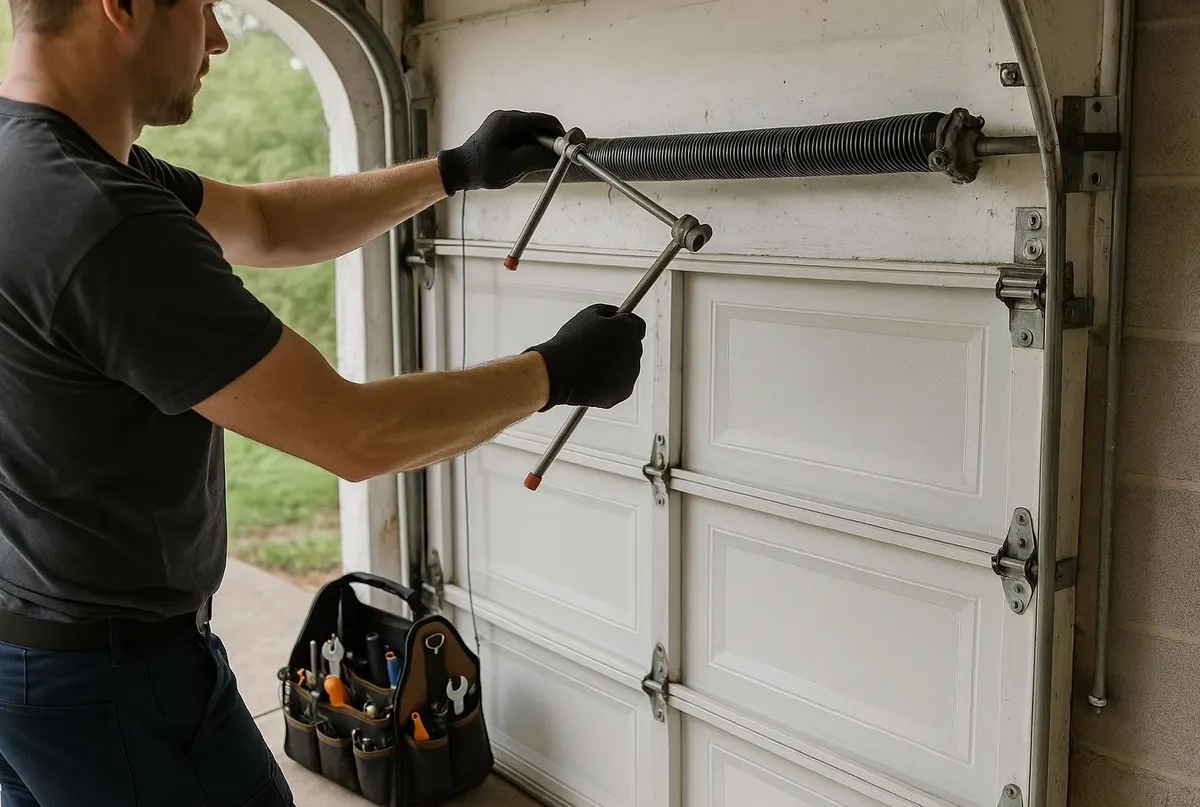
- Door feels heavy and off-balance when the opener is disconnected: disconnect the opener (pull the emergency release cord) and lift the door by hand halfway. It should stay roughly in place. If it drops or flies up, that's a spring problem, and no amount of force adjustment will fix it safely.
A Safe Way to Settle the Argument
Most openers have a simple test: lay a 2x4 flat on the ground where the door closes. Run the door down. It should hit the board and reverse immediately, without slamming into it first. If it doesn't reverse, or it visibly strains against the board before stopping, the force is too high and needs to come down — not up. Travel limits should be adjusted in small increments using the opener's manual, checking after each change rather than guessing and hoping.
If you find yourself increasing the force setting more than once in a season, that's the signal to stop adjusting and start inspecting. Repeated increases are the opener compensating for a mechanical problem that's getting worse, not better.
When to Call Kendall Garage Door Repair
If the door is unbalanced when disconnected, if springs look stretched or visibly worn, or if you've already turned the force up more than once without the real problem going away, it's time for a second set of eyes. We handle Garage Door Spring Repair for doors that have quietly gone out of balance, and Garage Door Opener Installation when an older unit has been compensating for mechanical wear for so long that the motor itself is on its way out. We'll set travel limits and force to the actual manufacturer spec for your door's weight, not just whatever stops the reversing for today.
If your garage door in Kendall, Pinecrest, The Hammocks, Palmetto Bay, Cutler Bay, South Miami, Homestead, or Coral Gables is reversing, slamming, or fighting its own opener, call Kendall Garage Door Repair before the settings get adjusted any further. We'll find out whether it's the opener or the door — and fix the one that's actually broken.